
Ethical Commitments
Ethical Code
Policy Statement
It is Travelife’s policy to conduct all of our business in an honest and ethical manner. We take a zero-tolerance approach to bribery and corruption and are committed to acting professionally, fairly and with integrity in all our business dealings and relationships wherever we operate and implementing and enforcing effective systems to counter bribery.
We will uphold all laws relevant to countering bribery and corruption in all the jurisdictions in which we operate.
The purpose of this policy is to:
- set out the responsibilities of Travelife and of those working for and with us, in observing and upholding our position on bribery and corruption; and
- provide information and guidance to those working for and with us on how to recognise and deal with bribery and corruption issues.
Bribery and corruption are punishable for individuals and if we are found to have taken part in corruption we could face an unlimited fine and face damage to our reputation. We therefore take our legal responsibilities very seriously.
We have identified that the following may be particular risks for our business:
- The refusal or termination of the Travelife Certified award may jeopardise a company’s ability to trade and may therefore act as an incentive for bribes to be offered.
- Corporate hospitality and gifts: There is a risk that corporate hospitality, such as customer or supplier entertainment, and the giving or receiving of gifts might be seen as bribery, especially in dealings with foreign public officials.
- Facilitation payments: These are payments demanded by officials (or others) simply to secure or expedite the performance of their normal duties (for example, granting a licence, allowing goods to cross a border, and so on). These are commonplace in some jurisdictions, but the making of such payments, regardless of how small, are not acceptable.
- We have frequent interactions with public officials, sometimes in high risk jurisdictions.
- We make awards in various jurisdictions, some of which may be considered high risk and in countries where corruption is perceived to be high.
Who is covered by the Policy?
This policy applies to all individuals working at all levels for Travelife, including senior managers, officers, directors, employees (whether permanent, fixed-term or temporary), committee members, auditors, consultants, contractors, trainees, seconded staff, homeworkers, casual workers and agency staff, volunteers, interns, agents, sponsors or any other person associated with us, wherever located (collectively referred to as workers in this policy).
What is Bribery?
A bribe is an inducement or reward offered, promised or provided in order to gain any commercial, contractual, regulatory or personal advantage. Offences can fall under four categories:
Offering a bribe: the offering, promising or giving of a reward to induce a person to perform a relevant function or activity improperly.
For example, you offer a potential TO tickets to the Travel Convention, but only if they get their company to agree to do business with us on favourable terms.
This would be an offence as you are making the offer to gain a commercial and contractual advantage. We may also be found to have committed an offence because the offer has been made to obtain business for us. It may also be an offence for the potential TO to accept your offer.
Receiving a bribe: the accepting of, agreeing to accept or requesting of a reward in return for performing a relevant function or activity improperly.
For example, TO promises to give you free accommodation on your next family holiday, but makes it clear that in return they expect you to give them a favourable audit score.
It is an offence for a TO to make such an offer. It would be an offence for you to accept the offer as you would be doing so to gain a personal advantage.
Bribing a (foreign) official: this is a specific offence of trying to influence a foreign public official with the intention of obtaining or retaining business in a situation where the public official was not permitted or required by law to be influenced.
For example, you arrange for Travelife to make a secret payment to a foreign official to speed up an administrative process such as clearing our goods through customs for the Travel Convention.
The offence of bribing a foreign public official has been committed as soon as the offer is made. This is because it is made to gain a business advantage for us. We may also be found to have committed an offence
Failure to prevent bribery: this – the ‘Corporate offence’ – occurs when an organisation fails to stop people who are operating on its behalf from being involved in bribery.
This offence of failing to prevent the act of bribery could occur as a result of the activities of a range of people working on behalf of the organization – an employee, consultant, auditor or agent, for example – if those individuals were involved in accepting or receiving a bribe which resulted in the organisations gaining or retaining business.
Gifts and Hospitality
This policy does not prohibit normal and appropriate hospitality (given and received) to or from third parties.
The giving (or receipt) of gifts is not prohibited, if the following requirements are met:
- it is not made with the intention of influencing a third party to obtain or retain business or a business advantage, or to reward the provision or retention of business or a business advantage, or in explicit or implicit exchange for favours or benefits;
- it complies with local law;
- it is given in our name, not in your name;
- it does not include cash or a cash equivalent (such as gift certificates or vouchers);
- it is appropriate in the circumstances. For example, in the UK it is customary for small gifts to be given at Christmas time;
- taking into account the reason for the gift, it is of an appropriate type and value and given at an appropriate time; and
- it is given openly, not secretly; and
- gifts should not be offered to, or accepted from, government officials or representatives, or politicians or political parties, without the prior approval of a Travelife Senior Manager.
We appreciate that the market practice of giving business gifts varies between countries and regions and what may be normal and acceptable in one region may not be in another. The test to be applied is whether in all the circumstances the gift or hospitality is reasonable and justifiable. The intention behind the gift should always be considered.
What is not acceptable?
It is not acceptable for you (or someone on your behalf) to:
- Give, promise to give, or offer, a payment, gift or hospitality with the expectation or hope that a business advantage will be received, or to reward a business advantage already given.
- Give, promise to give, or offer, a payment, gift or hospitality to a government official, agent or representative to “facilitate” or expedite a routine procedure.
- Accept payment from a third party that you know or suspect is offered with the expectation that it will obtain a business advantage for them.
- Accept a gift or hospitality from a third party if you know or suspect that it is offered or provided with an expectation that a business advantage will be provided by us in return.
- Threaten or retaliate against another worker who has refused to commit a bribery offence or who has raised concerns under this policy.
- Engage in any activity that might lead to a breach of this policy.
Facilitation payments and kickbacks
We do not make facilitation payments or “kickbacks” of any kind. Facilitation payments are typically small, unofficial payments made to secure or expedite a routine government action by a government official. They are not commonly paid in some countries, but are common in some other jurisdictions.
If you are asked to make a payment on our behalf, you should always be mindful of what the payment is for and whether the amount requested is proportionate to the goods or services provided. You should always ask for a receipt which details the reason for the payment. If you have any suspicions, concerns or queries regarding a payment, you should raise these with a Travelife Senior Manager.
Kickbacks are typically payments made in return for a business favour or advantage. All workers must avoid any activity that might lead to, or suggest, that a facilitation payment or kickback will be made or accepted by us.
Donations
We do not make contributions to political parties, unless obligatory when attending party conferences or events. We only make charitable donations that are legal and ethical under local laws and practices. No donation must be offered or made without the prior approval of a Travelife Senior Manager.
Your Responsibilities
You must ensure that you read, understand and comply with this policy.
The prevention, detection and reporting of bribery and other forms of corruption are the responsibility of all those working for us or under our control. All workers are required to avoid any activity that might lead to, or suggest, a breach of this policy.
You must notify a Travelife Senior Manager as soon as possible if you believe or suspect that a conflict with this policy has occurred, or may occur in the future. For example, if a company, Supplier or potential Supplier offers you something to gain a business advantage with us or indicates to you that a gift or payment is required to secure their business. Further “red flags” that may indicate bribery or corruption are set out at the end of this policy.
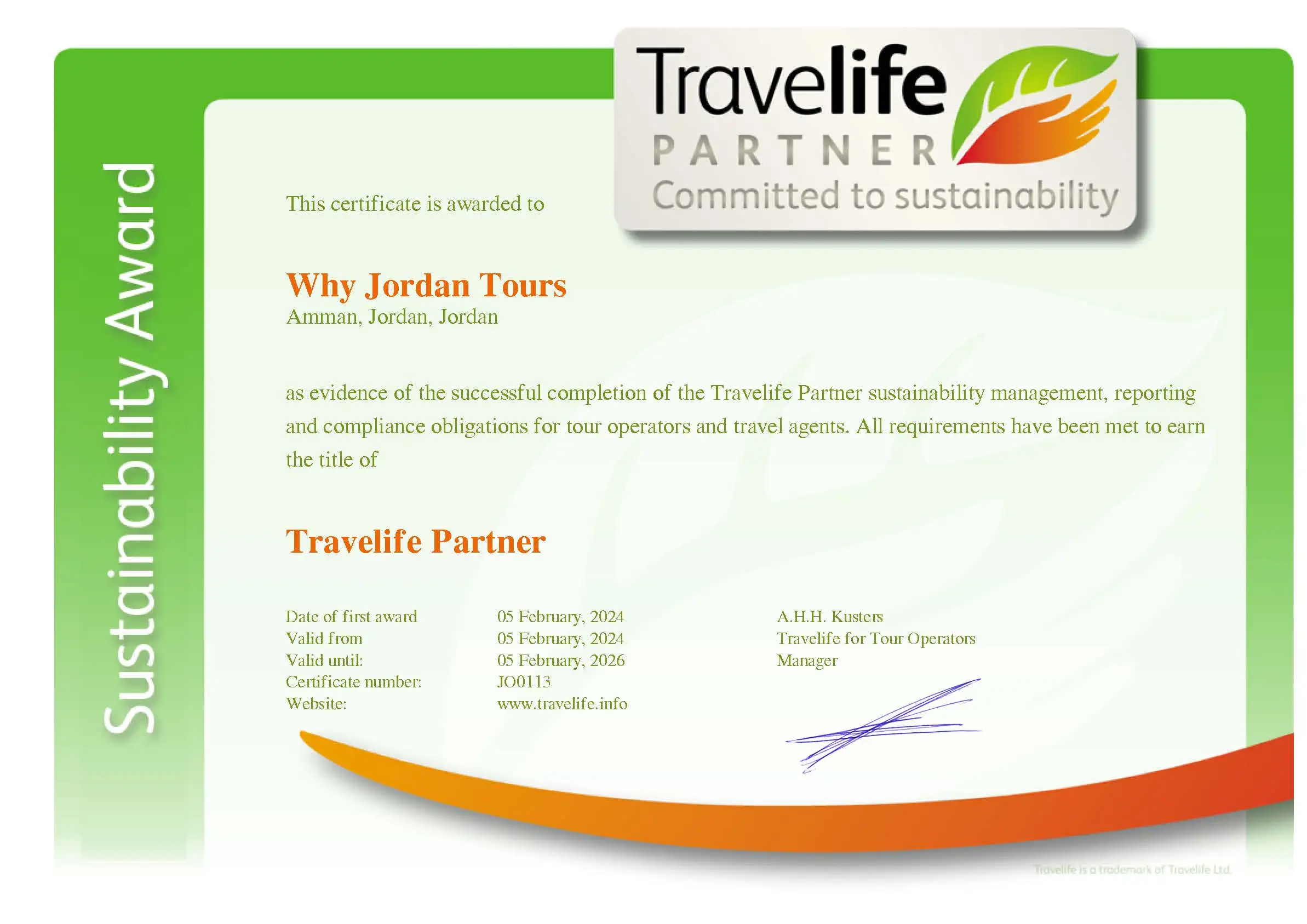
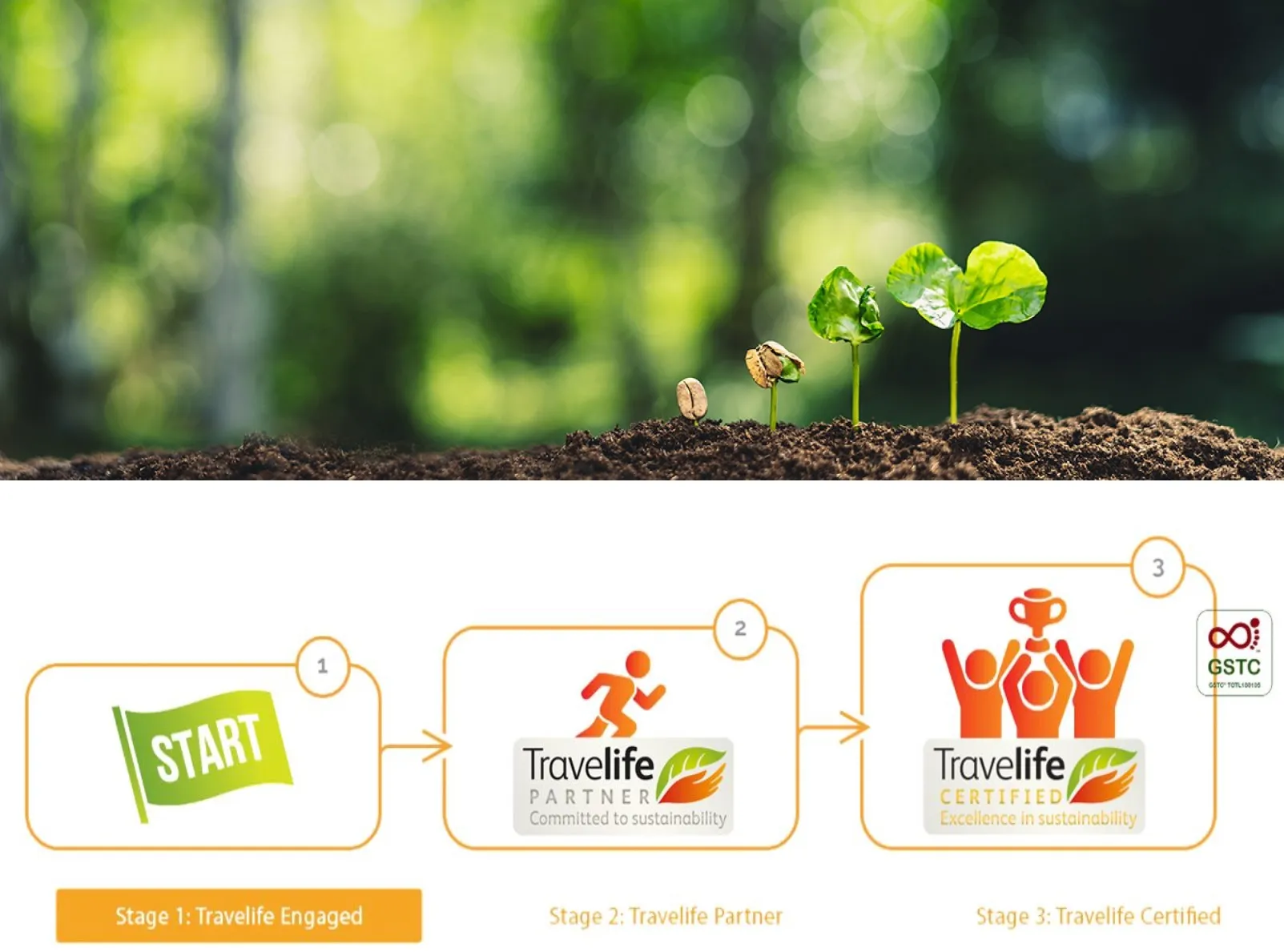
Travelife Partner
Why Jordan Tours is awarded as a Travelife Partner
Record Keeping
We must keep financial records and have appropriate internal controls in place which will evidence the business reason for making payments to third parties.
You must declare and keep a written record of all hospitality or gifts accepted or offered, which will be subject to managerial review.
You must ensure all expenses claims relating to hospitality, gifts or expenses incurred to third parties are submitted in accordance with our expenses policy and specifically record the reason for the expenditure.
All accounts, invoices, memoranda and other documents and records relating to dealings with third parties, such as clients, suppliers and business contacts, should be prepared and maintained with strict accuracy and completeness. No accounts must be kept “off-book” to facilitate or conceal improper payments.
How to raise a concern
You are encouraged to raise concerns about any issue or suspicion of malpractice at the earliest possible stage. If you are unsure whether a particular act constitutes bribery or corruption, of if you have any other queries, these should be raised with a Travelife Senior Manager.
What to do if you are a victim of Bribery or Corruption
It is important that you tell a Travelife Senior Manager as soon as possible if you are offered a bribe by a third party, are asked to make one, suspect that this may happen in the future, or believe that you are a victim of another form of unlawful activity.
Protection
Workers who refuse to accept or offer a bribe, or those who raise concerns or report another’s wrongdoing, are sometimes worried about possible repercussions. We aim to encourage openness and will support anyone who raises genuine concerns in good faith under this policy, even if they turn out to be mistaken.
We are committed to ensuring no one suffers any detrimental treatment as a result of refusing to take part in bribery or corruption, or because of reporting in good faith their suspicion that an actual or potential bribery or other corruption offence has taken place, or may take place in the future. Detrimental treatment includes dismissal, disciplinary action, threats or other unfavourable treatment connected with raising a concern. If you believe that you have suffered any such treatment, you should inform the compliance manager immediately.
Training and Communication
Our zero-tolerance approach to bribery and corruption must be communicated to all suppliers, contractors and business partners at the outset of our business relationship with them and as appropriate thereafter.
Potential risk scenarios: “red flags”
The following is a list of possible red flags that may arise during the course of you working for us and which may raise concerns under various anti-bribery and anti-corruption laws. The list is not intended to be exhaustive and is for illustrative purposes only.
If you encounter any of these red flags while working for us, you must report them promptly to a Travelife Senior Manager:
- you become aware that a third party engages in, or has been accused of engaging in, improper business practices;
- you learn that a third party has a reputation for paying bribes, or requiring that bribes are paid to them, or has a reputation for having a “special relationship” with foreign government officials;
- a third party insists on receiving a commission or fee payment before committing to sign up to a contract with us, or carrying out a government function or process for us;
- a third party requests payment in cash and/or refuses to sign a formal commission or fee agreement, or to provide an invoice or receipt for a payment made;
- a third party requests that payment is made to a country or geographic location different from where the third party resides or conducts business;
- a third party requests an unexpected additional fee or commission to “facilitate” a service;
- a third party demands lavish entertainment or gifts before commencing or continuing contractual negotiations or provision of services;
- a third party requests that a payment is made to “overlook” potential legal violations;
- a third party requests that you provide employment or some other advantage to a friend or relative;
- you receive an invoice from a third party that appears to be non-standard or customised;
- a third party insists on the use of side letters or refuses to put terms agreed in writing;
- you notice that we have been invoiced for a commission or fee payment that appears large given the service stated to have been provided;
- a third party requests or requires the use of an agent, intermediary, consultant, distributor or supplier that is not typically used by or known to us;
- you are offered an unusually generous gift or offered lavish hospitality by a third party.
Bribery
Employees will not offer, promise or give, not request, agree to or accept undue pecuniary or other advantage to/from public officials or the employees of business partners.
Consumer Rights
Employees will at all times respect customer privacy and take reasonable measures to ensure the security of personal data they collect, store, process or disseminate.
Fair Competition
Employees shall refrain from entering into or carrying out anti-competitive agreements among competitors, including agreements to:
- fix prices;
- make rigged bids (collusive tenders);
- establish output restrictions or quotas; or
share or divide markets by allocating customers, suppliers, territories or lines of commerce